How to Create a Cozy Bedroom for Better Sleep

Creating a cozy bedroom for better sleep involves controlling your environment through temperature regulation (keeping your room between 60-67°F), eliminating light and noise disruptions, and choosing calming colors and soft textures that signal your brain it’s time to rest.
The key is transforming your bedroom into a dedicated sleep sanctuary rather than a multipurpose living space.
Your bedroom should be your personal sleep cave, not a storage unit with a bed shoved in the corner.
If you’re tossing and turning at night or waking up feeling like you got hit by a truck, your bedroom setup is probably working against you.
Let’s fix that, because you deserve to actually enjoy the place where you spend a third of your life.
Step 1: Control the Temperature (Yes, It Really Matters)

Your body temperature naturally drops when you sleep, and fighting against that process keeps you awake.
Set your thermostat between 60-67°F before bed. I know that sounds cold, but trust me on this one.
If you’re worried about heating bills, get a good duvet and some thick blankets instead.
You want to feel like you’re sleeping in a cool cave while staying warm under the covers. That temperature contrast actually helps you fall asleep faster.
Quick Temperature Hacks
- Use a fan year-round for air circulation and white noise
- Try cooling pillow covers or moisture-wicking sheets if you sleep hot
- Keep socks nearby if your feet get cold (cold feet genuinely disrupt sleep)
Step 2: Blackout Everything (I Mean Everything)
Light tells your brain it’s go-time, not sleep-time. Even that tiny LED from your phone charger messes with your melatonin production. Get blackout curtains immediately if you don’t have them already.
Cover or remove all the little lights in your room. Use electrical tape over LEDs you can’t turn off. Remove the TV or at least cover the standby light.
Your room should be so dark you can’t see your hand in front of your face.
FYI, if you need to check your phone at night, use the red light filter or night mode. Blue light is the absolute worst sleep destroyer.
Step 3: Choose Calming Colors and Ditch the Clutter
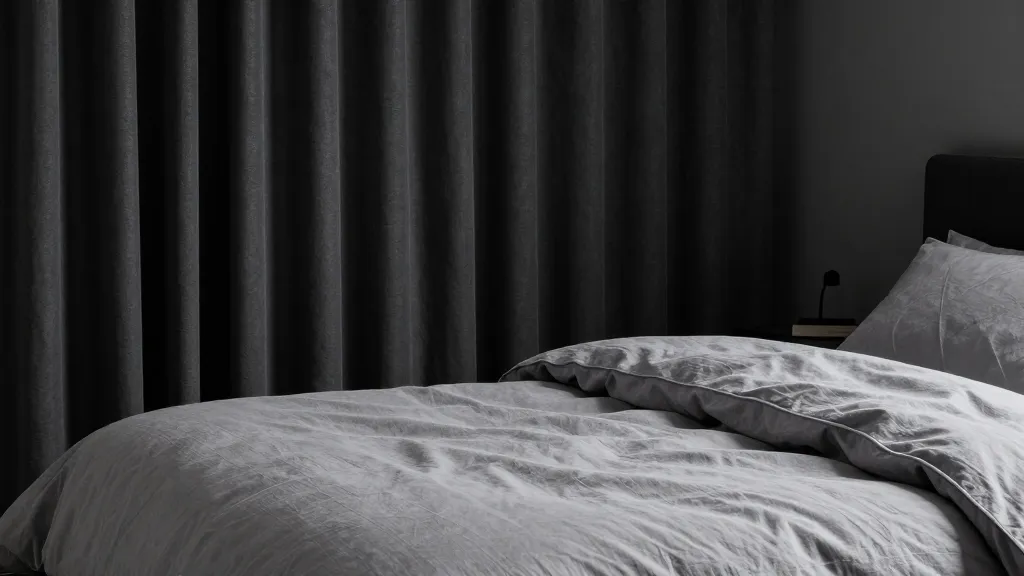
Your bedroom walls and decor should bore you in the best way possible. Save the bright orange accent wall for your kitchen.
Stick with soft blues, greens, grays, or warm neutrals that don’t stimulate your brain.
Now look around your room. How much stuff do you see? Clutter creates visual stress, even if you think you’re used to it. Clear off your nightstand except for essentials.
Put clothes away or at least hide them in a hamper with a lid.
The Five-Minute Nightly Reset
Spend five minutes before bed putting things back where they belong.
Make it a non-negotiable habit. A tidy room genuinely helps your brain shift into rest mode.
Step 4: Invest in Quality Bedding (Worth Every Penny)
You don’t need to spend thousands, but you also can’t expect great sleep from scratchy sheets and a lumpy pillow from 2009.
Get soft, breathable sheets in natural materials like cotton or linen. Polyester traps heat and feels gross.
Your pillow matters more than you think. Side sleepers need thick, firm pillows. Back sleepers need medium support.
Stomach sleepers need thin pillows (or better yet, should try to switch positions because stomach sleeping wrecks your neck).
Replace your pillows every 1-2 years. If you fold your pillow in half and it doesn’t spring back, it’s dead. Give it a proper funeral and get a new one.
Step 5: Eliminate Noise or Mask It Strategically
Silence is ideal, but most of us don’t live in ideal situations. If you have noisy neighbors or street traffic, you need a white noise machine or fan to create consistent background sound.
Earplugs work too, but they’re uncomfortable for some people. I’m honestly not sure they work for everyone long-term.
Experiment with what helps you instead of suffering through interrupted sleep.
Avoid falling asleep to TV or podcasts with varying volumes. Your brain stays partially alert listening for changes in sound. Consistent, boring noise wins.
Step 6: Remove Work and Screens from Your Sleep Space
Your bedroom is for sleep and relaxation, period. Having your laptop open on the bed while you answer emails at 10 PM trains your brain to associate your bedroom with stress and alertness.
Move your desk to another room if possible. If you live in a studio, at least create a physical barrier between your work area and sleep area.
Use a room divider or position your bed facing away from your workspace.
Charge your phone outside the bedroom. Use an actual alarm clock like it’s 1995.
If that sounds extreme, you’re probably more addicted to your phone than you realize.
Step 7: Add Cozy Textures and Mood Lighting
Layers make a bedroom feel like a retreat. Add a plush rug beside your bed so you’re not stepping onto cold floors.
Throw a soft blanket at the foot of your bed. Get some pillows that are actually comfortable, not just decorative torture devices.
For lighting, install a dimmer switch or use lamps with warm-toned bulbs. Bright overhead lights blast your brain awake.
You want gentle, adjustable lighting that you can lower as bedtime approaches.
Candles create great ambiance if you’re into that, but obviously blow them out before you sleep. Or get the fake ones that flicker. No judgment either way.
Key Takeaways
- Temperature control (60-67°F) and total darkness are non-negotiable for quality sleep
- Your bedding quality directly impacts how well you sleep, so invest in comfortable sheets and replace old pillows
- Remove work materials, screens, and clutter to train your brain that your bedroom equals sleep only
- Use calming colors, soft textures, and consistent white noise to create a true sleep sanctuary
- Small changes add up quickly, so start with one or two steps and build from there